
Debt-ridden national carrier Air India tops a brand reputation survey.
Known for his jovial and kind nature, Neeraj left a lasting impression on his neighbours in Akola, which is why the news of his passing devastated the entire town, even though many had not seen him in years.
Flight operations at Sardar Vallabhbhai Patel International Airport, which were suspended earlier following the crash of a Gatwick (London)-bound Air India Boeing 787-8, have now commenced with limited flights, the private airport operator said.
Within two weeks of many airlines deciding to roll back salary cuts encouraged by a steady increase in traffic flow, a second wave of coronavirus along with rules of compulsory RT-PCR test has hit forward bookings. The fears of last summer, when the pandemic had overturned all the wisdom of airline boardrooms, have returned to haunt the aviation industry. According to an official in the Ministry of Civil Aviation, flight occupancy is down to 60 per cent from 70 per cent in the first week of March. Airline lobby group IATA estimates that low cost airlines need to fly at 80 per cent occupancy to be profitable.
Noting that private airlines had raised fares exorbitantly in the wake of Air India strike, members in the Rajya Sabha on Thursday voiced concern over the matter even as the government promised to ask such carriers not to take advantage of the situation.
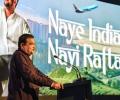
From highways connecting once-remote regions to aviation networks carrying millions, India's infrastructure story is one of transformation.

IATA informed travel agents that they would have to remit the ticket sale proceeds to airlines every week.
An executive of a private airline said even though volume picked up, it will be difficult for airlines to make money as fares have remained low even during festive season.

Domestic rating agency ICRA on Monday said Indian companies are likely to clock 7-8 per cent revenue growth during the March quarter of the current fiscal year, led by revival in rural demand and uptick in government spending. ICRA expects the private capital expenditure (capex) cycle to remain measured in view of the uncertainties around geopolitical developments and relatively subdued outlook on merchandise exports from India.

'$125 million for the hull and the remaining of over $350 million for liability.'
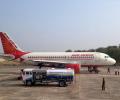
Air India will no longer enjoy a priority in allocation of international traffic rights. This follows its takeover by Tata Sons in January. The Directorate General of Civil Aviation has dropped a clause which gave Air India an advantage over other private airlines in the amended rules issued on April 19.

Private carrier Air India on Monday announced placing an order to purchase 100 more Airbus aircraft, comprising 10 wide-body A350 and 90 narrow-body A320 family aircraft including A321neo.

The directive came at a meeting DGCA chief E K Bharat Bhushan held with senior officials of private airlines, following complaints that exorbitant spot-fares being charged by the carriers in the wake of cancellation of Air India flights because of the ongoing pilots' strike.
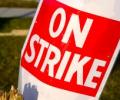
Globally, as well as in India, most airlines pay their pilots a fixed salary. Private airlines in India pay an Executive Commander a salary from Rs 4,15,000 to Rs 4,35,000 per month. However, if the pilot flies more than 70-75 hours a month, he gets an additional payment for each hour flown, aboutr Rs 4,000 an hour.

In a major boost to private airlines, especially IndiGo and SpiceJet, the civil aviation ministry has lifted the freeze on them to expand abroad.
For any airline to be eligible for restructuring, the current ratio has to be equal to or higher than 0.4, while 'debt to Ebitda' has to be equal to or less than 5.5.
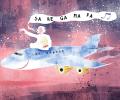
So should airlines play the keening, trance-like Siddi folk music from the Kutch peninsula? The Sufiana Kalam of Kashmir? Carnatic music? Rabindra Sangeet? Bihu melodies? Classical music from the Hindustani gharanas? Ghazals? Bhajans? Bollywood hits?... asks Kanika Datta.

With Air India in dire straits, a demand was made on Wednesday by a Bharatiya Janata Party member in Lok Sabha for a Joint Parliamentary Committee probe into the workings of the national carrier, which has incurred Rs 5,000 crore (Rs 50 billion) losses.
Mauritius on Monday said it would soon adopt the open sky policy and allow private airlines from India to use its air space.
Liquor baron Vijay Mallya-promoted Kingfisher Airlines has become the first private airline in the country to get Category III certification from the Directorate General of Civil Aviation.

'Even if India is attractive, FPIs currently lack the funds to invest, as money is being redirected to the US.'
Replying to supplementaries during Question Hour in Rajya Sabha, civil aviation minister Praful Patel said, "full service airlines earlier used to offer five per cent commission to travel agents on basic fare." "From November 1, 2008, Air India, Jet Airways and Kingfisher abolished the agency commission and introduced transaction fee model... (however) Jet and Kingfisher have started paying commission on basic fare and fuel surcharge.
Paramount Airways aims at acquiring stakes in other airlines as part of its plans for a pan-India presence by 2011, according to its top official.
Mumbai International Airport (MIAL) has proposed a significant increase in User Development Fee (UDF) for international passengers, while domestic passengers will be charged a UDF for the first time. However, MIAL also proposed a 35% reduction in landing and parking charges, aiming to balance infrastructure development with cost-effective air travel for airlines. The new tariff structure is subject to approval by the Airport Economic Regulatory Authority (AERA).
Air travellers have got more reasons to cheer the new year as leading airlines have decided to reduce fares.

A ministry's internal note proposes caps on minimum and maximum fares airlines can charge, keeping in mind their cost structure, profit margin and ensuring the last minute fares are not out of bounds of passengers.
Protocol to accord such services to MPs have been in existence for over three years now.
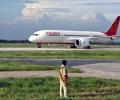
Life of air passengers was different in the 1970s.
Airline managements are divided on the likely impact of the settlement of the Jet Airways imbroglio.
Its recent decision to scrap rules that make it mandatory for airlines to deploy 10 per cent of their capacity on unviable routes like Jammu & Kashmir, the northeast and the Andaman & Nicobar Islands and subsidise those that agree to do so flies in the face of logic.

So why did the airline industry blink and decide to beat it? Well, quite a few reasons for it actually. Read on. . .
China's state-run Sichuan Airlines has suspended all its cargo flights to India for 15 days, causing major disruption to private traders' efforts to procure the much-needed oxygen concentrators and other medical supplies from the country despite Beijing reiterating its readiness to help India to deal with the latest surge of COVID-19 cases.
Even though air passenger traffic picked up last month, the overall long-term sentiment for airlines is poor, Air India chief Arvind Jadhav said on Friday.

In an unprecedented show of solidarity on Friday in Mumbai, India's cash-strapped, loss-making private airlines -- including Kingfisher Airlines, Jet Airways, and others -- have demanded a bailout package from the government or they 'will have to suspend their operations indefinitely'.
Failure to reinstate salary even two years after the drastic cuts has landed the airline industry in a massive industrial relation crisis. While employees of Air India had organised a strike back in 2011, it is for the first time that private airlines are facing serious stress related to workers. IndiGo witnessed two of them, back to back. In the first instance, around 50 per cent of the IndiGo flights were delayed as a large number of crew members went on mass sick leave, apparently to participate in a rival airline's walk-in job interview.

Chief executive officers (CEOs) across sectors have expressed intentions to expand capacities, expecting the government's target to invest a record Rs 11.11 trillion on infrastructure development will act as a catalyst for a jump in consumer demand. "With the government planning a capex of Rs 11.11 trillion, private sector investment will come in a big way. Companies will be preparing for it right from today," H M Bangur, chairman of Shree Cement, told Business Standard. For the past few years, the investment scene in India has been dominated by government capital expenditures; private investments in the manufacturing sector have remained muted.
Take the rediff business quiz and see how much you know about India and its private airlines.
The government is taking the first steps towards opening of the Gulf region to private airlines -- by setting a high-level committee under the aegis of the aviation ministry -- to examine the contentious issue.
"The strategic divestment transaction of Air India successfully concluded today with transfer of 100 per cent shares of Air India to M/s Talace Pvt Ltd along with management control," DIPAM secretary Tuhin Kanta Pandey said in a tweet. A new board, led by the strategic partner, takes charge of Air India, he added.
 © 2026 Rediff.com - Advertise with us - Disclaimer - Privacy Policy - Sitemap - Feedback - About us - Terms of use - Grievances